Scissor lifts are one of the most commonly used types of access equipment across construction, maintenance, and industrial sites. From electrical work and installations to building maintenance and warehouse operations, they provide a safe and efficient way to work at height.
But one question we’re often asked is:
Do you need IPAF training to operate a scissor lift?
The short answer is yes — in most professional environments, operators are expected to have recognised training before using access equipment. In this article, we explain when IPAF training is required and why it’s considered the industry standard.
What Is a Scissor Lift?
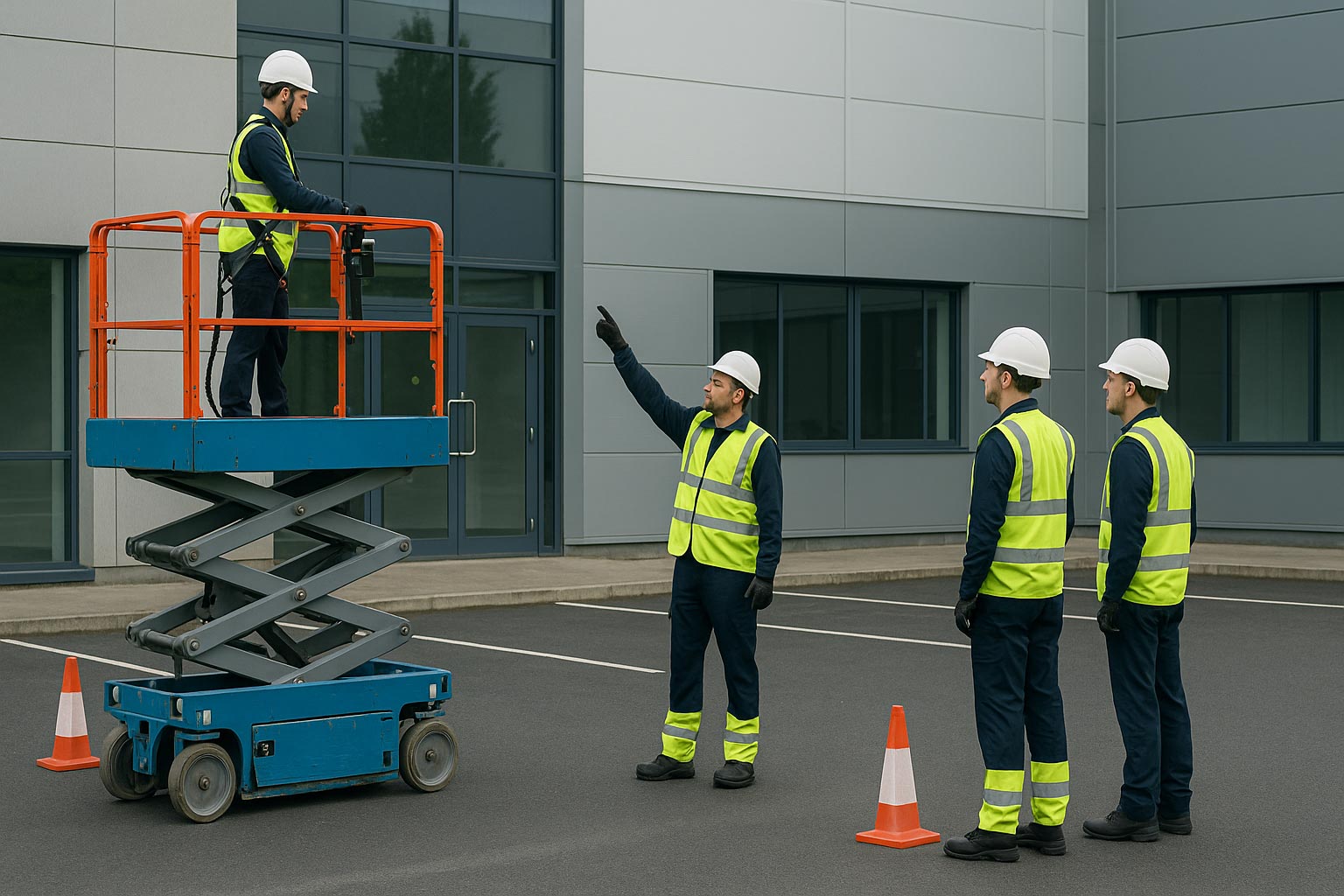
A scissor lift is a type of Mobile Elevating Work Platform (MEWP) designed to raise workers vertically to a working height. Unlike boom lifts, scissor lifts move straight up and down, providing a stable platform for tasks that require working directly above the machine.
They are commonly used for:
- Electrical installation work
- Warehouse maintenance
- Ceiling and lighting installation
- Painting and decorating
- Facilities maintenance
- Construction and refurbishment projects
Because they lift workers several metres above ground level, safe operation is critical.
Is IPAF Training Required for Scissor Lift Operators?
While specific legal requirements can vary by site and employer, most construction sites and industrial workplaces require operators to have recognised MEWP training.
The IPAF Operator course is widely accepted across the access industry and is designed to ensure operators understand how to use access platforms safely and correctly.
For scissor lifts specifically, operators typically complete the:
IPAF 3a Operator Course (Mobile Vertical MEWPs)
This training covers machines such as:
- Electric scissor lifts
- Diesel scissor lifts
- Vertical personnel lifts
Many operators also complete 3a and 3b training together, allowing them to operate both scissor lifts and boom lifts.
What Does IPAF Scissor Lift Training Cover?
The IPAF Operator course focuses on the practical skills and knowledge needed to safely operate MEWPs.
Key topics include:
- Safe machine operation
- Pre-use inspections
- Hazard awareness
- Site safety considerations
- Emergency procedures
- Understanding machine controls and limitations
After completing the training and passing both the theory and practical assessments, operators receive an IPAF PAL Card, which confirms their certification.
This qualification is valid for five years.
Why Sites Require IPAF Certification
Working at height carries inherent risks, which is why many contractors and site managers require certified operators.
IPAF training helps ensure that operators:
- Understand the correct machine for each task
- Carry out proper safety checks
- Operate equipment within safe limits
- Reduce the risk of accidents on site
For employers, it also provides confidence that staff have been trained to recognised industry standards.
Where to Get IPAF Scissor Lift Training
At DTA Training, we provide IPAF Operator training for scissor lifts and boom lifts, helping operators gain the skills and certification needed to work safely at height.
Our courses combine expert instruction with hands-on practical training, ensuring participants leave confident operating access equipment safely and efficiently.
If you’re unsure which IPAF course is right for you or your team, our team is always happy to help.